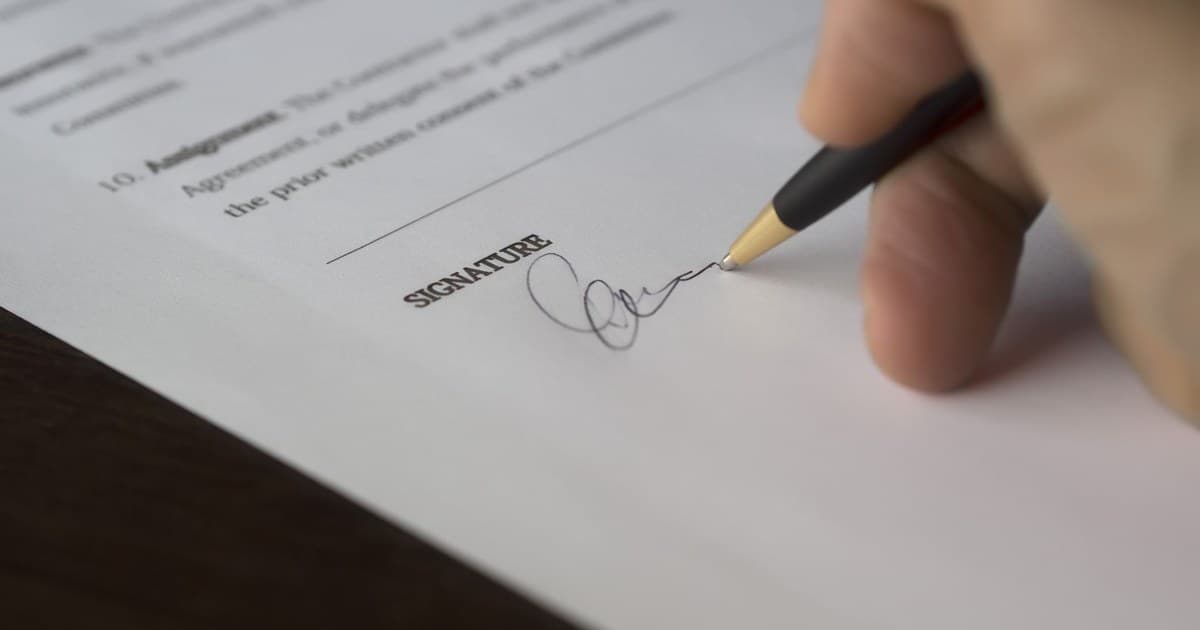
The paper: stamp duty, registration and witnesses
Three questions decide whether your agreement will stand up when it matters.
The stamp paper. For an agreement relating to the sale of immovable property in Punjab, the Stamp Act 1899 (Schedule I, Item 5(cc)) fixes the duty at Rs 3,000. That is a statutory figure, not a market habit. An under-stamped agreement is inadmissible in proceedings until the deficit duty and penalty are paid, so this is not the place to save money.
Registration. An agreement to sell is not compulsorily registrable under the Registration Act 1908. The Lahore High Court held in PLD 1964 Lahore 490 that such an agreement "does not create any present right in property," which is the precise reason it need not be registered. Optional registration exists, at an additional 0.1 percent duty, and practitioners disagree about whether the marginal gain is worth the cost. What matters is that a lack of registration is not usually a defence against the agreement in a court suit.
Witnesses. An agreement to sell must be attested by at least two witnesses under Article 17 of the Qanun-e-Shahadat, and a 2026 Lahore High Court judgment enforced this strictly, requiring proof of the agreement "by producing two marginal witnesses" plus evidence of the payment. Templates commonly record the witnesses' CNIC numbers alongside the parties', which is recommended practice rather than statute, but there is no reason not to do it.
The two clauses that decide everything
Every bayana agreement turns on the default clauses. Get these right and most of the document's value is captured.
If the buyer defaults, the bayana is forfeited to the seller. This is confirmed as the general term in PLJ 2015 Islamabad High Court 330, and it appears verbatim in the DHA sample template: "his/her earnest money will be considered as forfeited." There is a legal limit worth knowing. The Supreme Court held in 2010 SCMR 1507 that forfeiture only holds where the vendee is at fault, proved from the whole agreement, and in 2011 PLD 119 SC that earnest money is "merely security." A buyer who defaults because the seller could not deliver clean title has a real defence.
If the seller defaults, the customary clause is a double refund: the seller returns the bayana plus an equal amount as penalty. The same PLJ 2015 judgment describes this as the general term. But it is a contractual custom, not a statute, and it varies by drafting. The widely used DHA template, for instance, gives the buyer no double penalty at all; for seller refusal it grants "the right to get the execution of the Transfer Papers/Sale Deed through Court" instead. And enforcement reality is sobering. One practitioner puts it plainly: in around 90 percent of real cases, a defaulting seller simply refunds the original amount. The clause's main value is leverage, keeping the seller honest during the bayana window.
The honest summary: forfeiture on buyer default is well established; double refund on seller default must be written in to exist at all, and it is easier to threaten than to collect.
What the agreement must contain
A bayana agreement that skips the basics is barely better than a receipt. Compile it from the standard DHA template, the NMK Legal drafting checklist and Zameen's transfer guide, and the essentials are:
- Full names, CNIC numbers and addresses of both parties.
- Precise property description: number, size, block, society or area.
- The seller's declaration of ownership, and that the property is free of encumbrances, litigation and loans.
- The total sale price, in figures and words.
- The bayana amount with instrument details: pay order or cheque number, date and bank.
- The balance and the date by which it "shall be paid."
- The seller's duty to clear all dues and development charges.
- The seller's obligation to appear and sign all transfer documents.
- Default clauses for both sides, including the double-refund term if agreed.
- A no-other-dealing covenant: the seller has not and will not negotiate with anyone else during the bayana period.
- Whether the buyer may assign the deal to a nominee. Say it explicitly.
- Who pays the dealer's commission, and when.
- That heirs and successors are bound.
- Two attesting witnesses with names and CNIC numbers, plus the parties' signatures and the date.
What this means for Lahore buyers specifically
In Lahore's established societies, the bayana stage has its own local habits. The most important is the investor flip. A DHA consultant who has handled these transactions for years reports that 60 to 70 percent of DHA Lahore sales now pass through an investor bayana: the investor locks the plot at a below-market price with about one-eighth down and four to six weeks to transfer, then finds a genuine buyer inside the window and keeps the spread. This is not illegal in itself. It becomes a scam when the seller is not told that the "buyer" has no funds to complete, or when the flip squeezes the seller at the last minute because the investor could not find an end buyer in time. Sellers protect themselves with the quarter-for-four-weeks rule and by insisting on genuine buyers first.
For buyers, the local discipline is the same as at the token stage, only with more money at stake. Verify ownership through the latest fard or allotment letter, check the scheme's legal status with the right authority, and for LDA-controlled areas confirm the property records independently. Pay in front of the true owner and directly into the owner's account. There are documented cases of buyers who paid large advances into a dealer's personal account and spent years chasing the money back. And use a pay order or call deposit receipt rather than cash: in DHA and Bahria Town, the professional practice is a pay-order photo as the commitment, with the original instrument handed over only when the bayana agreement is signed, because a pay order can be cancelled at the bank if the deal collapses first.
One more Lahore habit worth knowing: the double-bayana. Sellers with financial trouble sometimes take bayana from two buyers on the same plot. The no-other-dealing covenant in the template exists precisely for this risk. If the seller will not sign it, that tells you what you need to know.
Taxes happen at transfer, not at bayana
A question that comes up in every serious deal: does the tax clock start when the bayana is paid? The law says no. Section 236C of the Income Tax Ordinance collects advance tax from the seller "at the time of registering, recording or attesting the transfer," and FBR's own FAQs apply the provisions at registration and at attested transfer in society offices. No source supports any declaration or collection at the bayana stage.
What the buyer should budget, separately from the price, is the transfer-stage stack: advance tax under section 236K (1.25 percent for filers under Finance Act 2026), stamp duty and registration on the sale deed, and the society's transfer fee. The seller's 236C is 2.75 percent for filers. Both advance taxes apply on the higher of the agreed price and the FBR or DC rate. Stamp duty on the final deed is genuinely disputed in 2026: the statute text reads 2 percent urban and 3 percent rural, April press reporting put a uniform 1 percent via the Stamp (Amendment) Ordinance, and later analysis supported 2 percent urban and 1 percent rural. Confirm the live rate at the e-stamp counter before budgeting, and read our property tax guide for the full breakdown with worked examples.
Check the price before the commitment
Bayana is paid right after the price is agreed, which makes it the last moment to sanity-check the number before serious money moves. If comparable plots in the same block are asking materially less than what you agreed, the bayana locks you into negotiating from a weak position.
Estimate your plot or house value with current market data before the bayana meeting. An estimate built from block-level comparables tells you whether the agreed price is defensible, and that knowledge changes the conversation at the table. AI valuations are estimates based on available market information and property inputs. Actual sale value can vary according to exact location, condition, plot orientation, street width, development status, demand, documentation and negotiation.
Frequently asked questions
Is a verbal bayana valid?
It is legally risky to the point of being worthless. A court enforces written agreements proved by two witnesses and payment evidence. A verbal promise, even for lakhs, is almost impossible to prove against a seller who denies it.
Can the buyer assign the bayana to another buyer?
Only if the agreement allows it. The standard template permits nomination; investor flips rely on this clause. If you are a genuine buyer, a clause that bars assignment protects you from discovering your seller is flipping the deal. If you are the investor, its absence kills your exit.
What if the seller sells to someone else after taking my bayana?
That is what the no-other-dealing covenant and the default clauses are for. Civil remedies include a suit for specific performance in the civil court, which must be filed within three years, with a temporary injunction to stop disposal during the suit. Where there is dishonesty, a fraud FIR under section 420 of the Pakistan Penal Code is the criminal route. Civil and criminal tracks can run in parallel, but which fits depends on the facts, and that is a question for a lawyer.
Does bayana count toward the purchase price?
Yes, it is part of the price, adjusted at completion. The agreement should state the total price, the advance paid and the balance explicitly, in figures and words, so there is no later dispute about whether the money was an advance or a separate fee.
Is the stamp duty on the bayana agreement the same as on the sale deed?
No. The agreement to sell carries a flat Rs 3,000 in Punjab. The sale deed carries the conveyance duty, which is the disputed figure in 2026. Treat them as separate budget lines.
What is the assignable deed mentioned in 2026 news?
The April 2026 Stamp (Amendment) Ordinance introduced an "assignable deed" concept, where paying 1 percent duty gave a private agreement one year of legal cover, but the ordinance was a 90-day temporary measure. Its current status and whether it changed the bayana duty are not verified. Do not rely on it without fresh legal confirmation.
The bottom line
Bayana is where a Lahore property deal becomes real, and its power comes entirely from the paper. Pay it only under a written agreement on Rs 3,000 stamp paper, with two witnesses, the true owner present, and the money through banking channels. Write the default clauses exactly as you intend them, because custom fills gaps you would not like. And use the bayana window the way it was meant to be used: not to celebrate the deal, but to complete the verification you started at the token stage.
If you are buying in Lahore and want a second opinion before serious money moves, message Shakir Estate on WhatsApp at +92 300 4630499 with the society name, block and agreed price. We will tell you honestly what the market data supports and what still needs checking, before you commit a single rupee.