How Plot Valuation Works in Pakistan: A Practical Guide
What actually determines a plot's price in Pakistan? A clear walkthrough of comparables, block-level premiums, possession status and the difference between asking prices and real transaction prices.
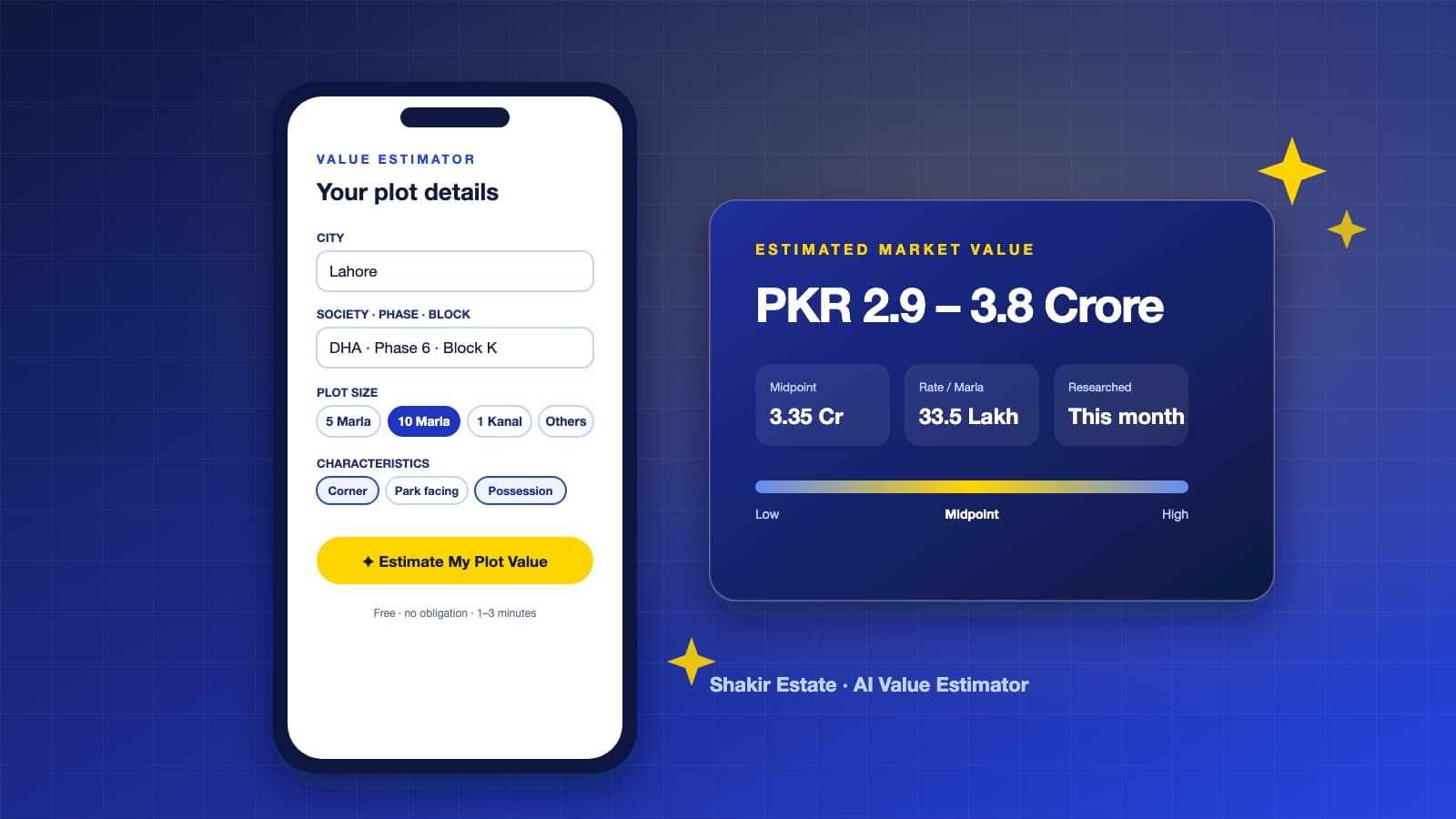
Ask three dealers what your plot is worth and you may get three different numbers. That is not necessarily dishonesty — it reflects how informal most valuations are. A defensible valuation follows a method. This guide explains that method, the same logic our consultants and our AI Plot Value Estimator apply.
Comparables: the foundation of every honest valuation
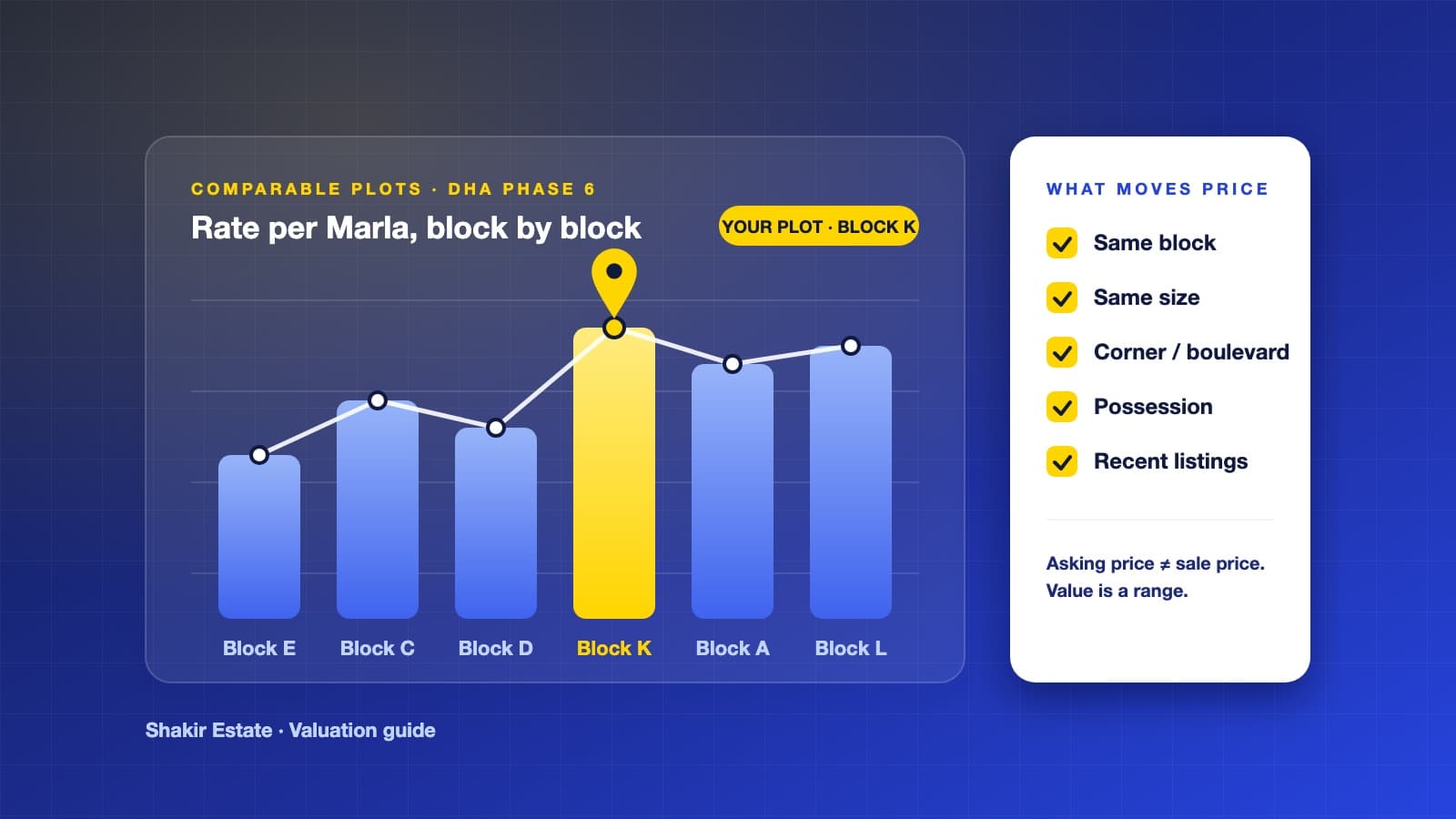
A plot is worth what similar plots nearby are actually trading for. "Similar" and "nearby" do the heavy lifting:
- Same society — a DHA plot is priced against DHA, not against the city average.
- Same phase — phases within one society can trade at very different levels depending on development status and demand.
- Same block or sector — even adjacent blocks can carry meaningful premiums or discounts based on location within the phase, plot cutting, and proximity to parks, mosques and commercial areas.
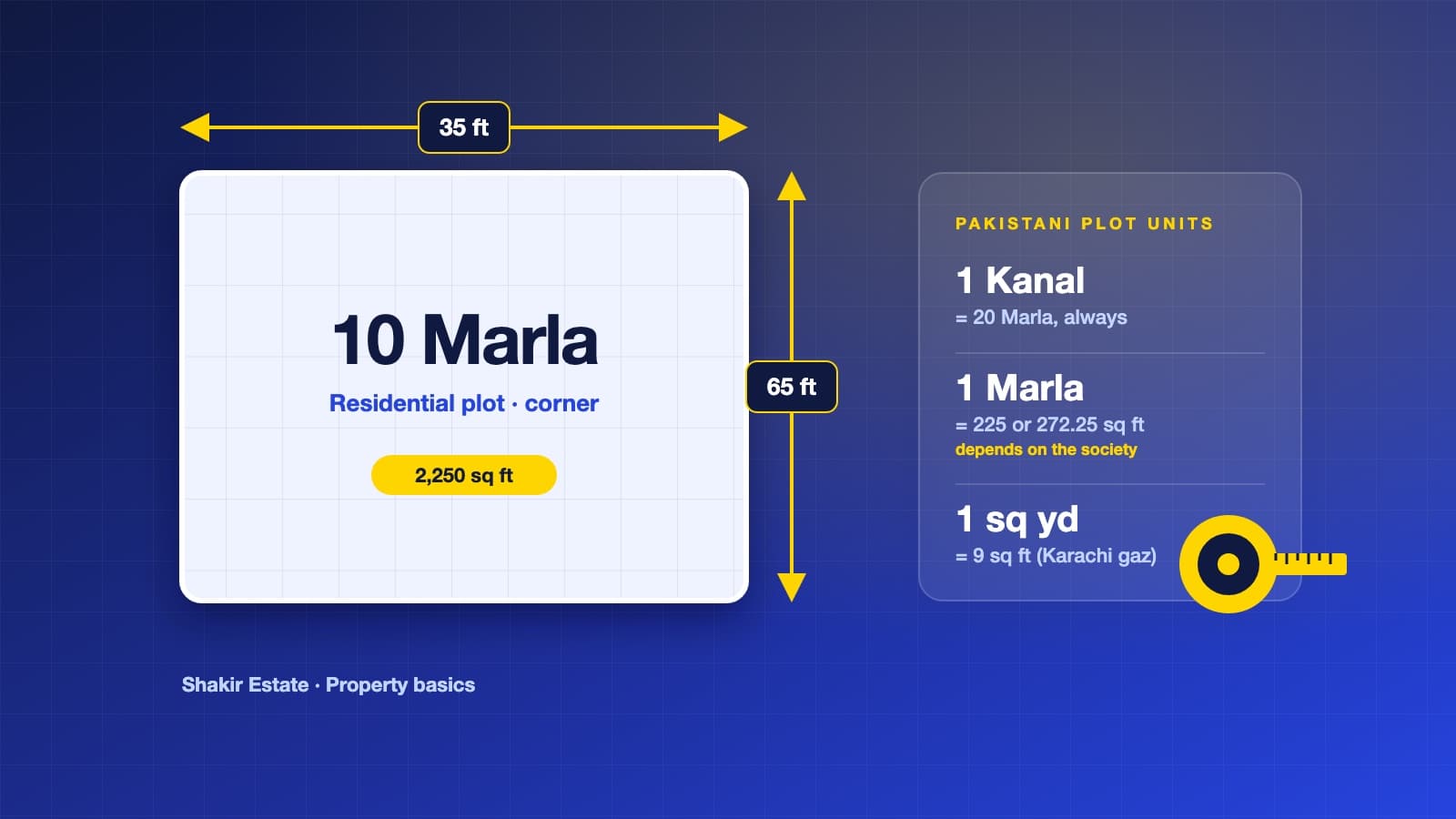
- Same size category — the per-Marla rate of a 5 Marla plot usually differs from that of a 1 Kanal plot in the same block. Smaller plots often trade at higher per-Marla rates.
The further a comparable sits from your plot — geographically or by category — the less weight it deserves. A valuation built on three listings from your own block beats one built on thirty listings scattered across the city.
The characteristics that move prices
Within the same block, individual plot features create premiums and discounts. The usual suspects:
| Factor | Typical direction |
|---|---|
| Corner plot | Premium |
| Main boulevard frontage | Premium |
| Park or green-belt facing | Premium |
| Near commercial area | Premium for commercial use, mixed for residential |
| Possession available | Premium over non-possession |
| Fully developed sector | Premium over under-development |
| Extra land (paid) | Priced per the society's extra-land policy |
| Odd shape or narrow frontage | Discount |
| Low-lying or filled land | Discount |
Asking price versus transaction price
Almost all public market data in Pakistan consists of asking prices — what sellers hope to receive. Actual transaction prices typically settle below asking, with the gap varying by market conditions, urgency and negotiation. A careful valuation therefore:
- treats asking prices as a ceiling, not a midpoint;
- looks for clusters of similar asking prices rather than single listings;
- discounts obvious outliers (a listing far above or below the cluster is usually promotional, stale or mistaken);
- distinguishes a hot market (small gap between asking and closing) from a slow one (larger gap).
Why ranges beat single numbers
Because the inputs are asking prices and the comparables are never identical, a truthful valuation is a range with a confidence level, not one precise figure. A tight range with high confidence is possible when there are many fresh, nearby comparables that agree. When evidence is thin — a new block, an unusual size, a quiet market — the honest output is a wider range and a lower confidence score.
When to involve a professional
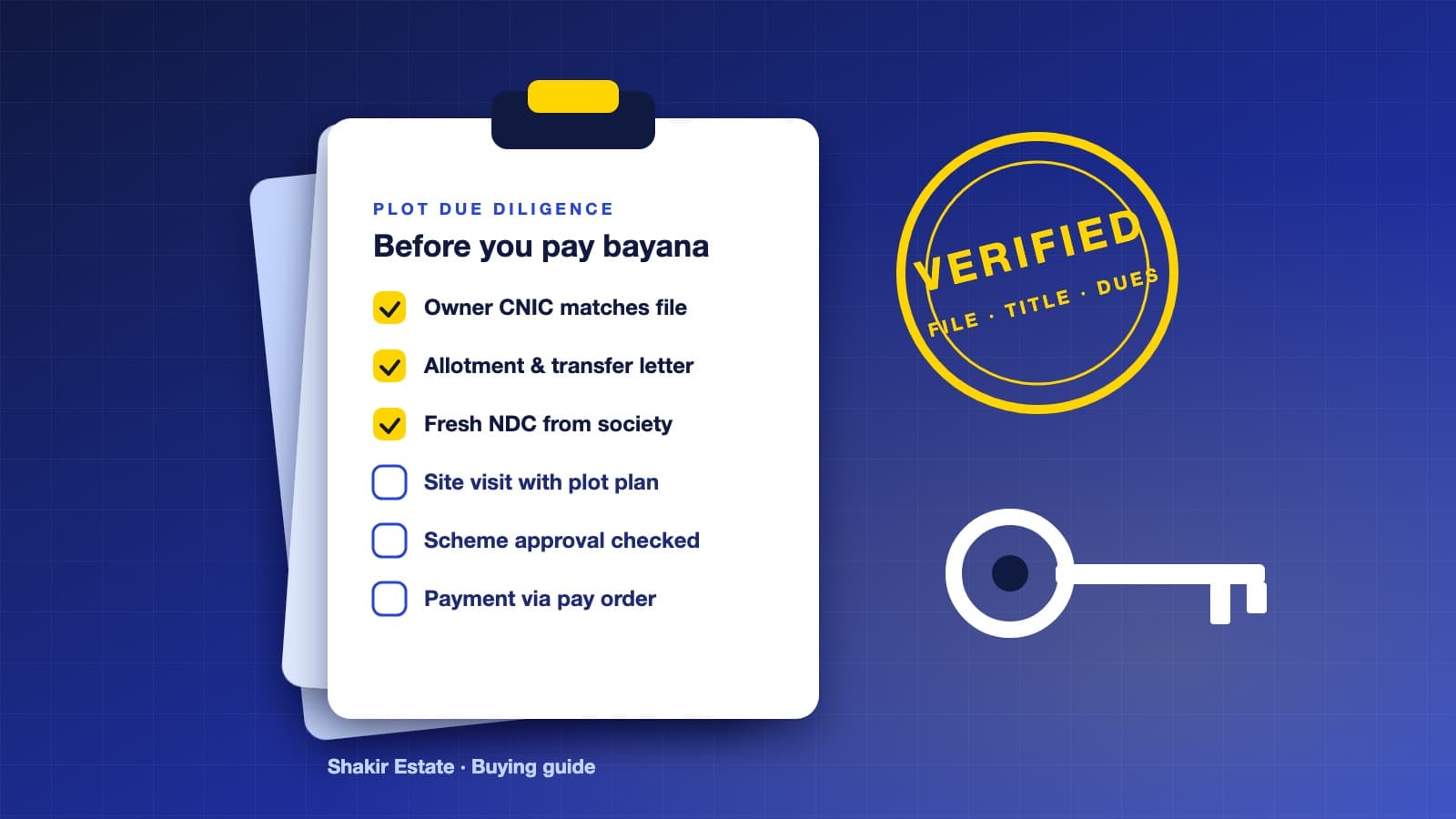
An evidence-based estimate tells you where the market stands. A professional valuation adds what no portal shows: on-ground verification of the plot's condition and surroundings, documentation status, society dues, and the negotiating reality of your specific block. If you are preparing to sell, start with the estimate, then talk to us — we typically deliver a professional opinion within 24–48 hours of receiving complete details.
Wondering what your plot is worth?
Get an AI-generated market estimate backed by current research — comparables, rates and sources included.
Estimate My Plot Value